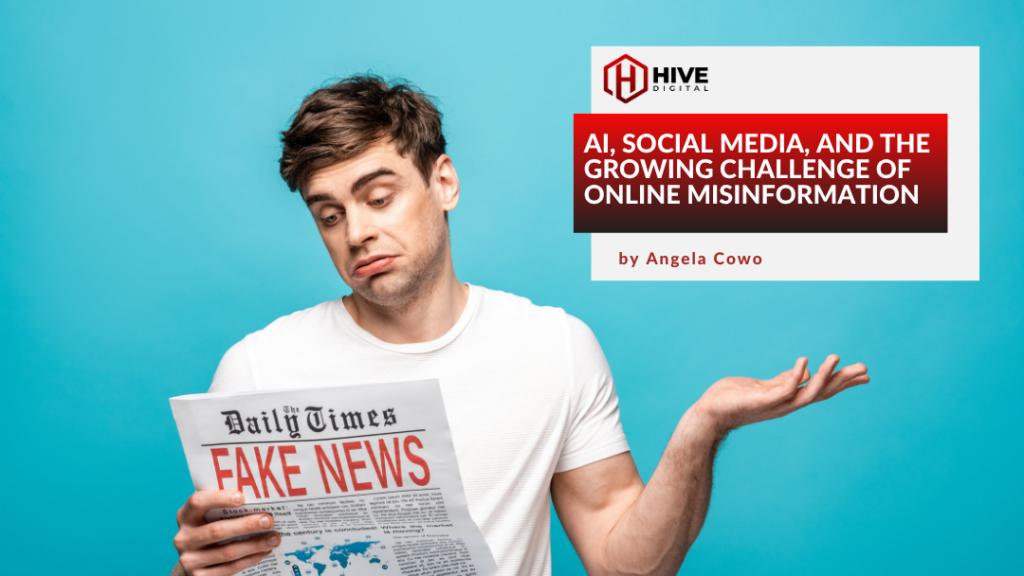
A celebrity appears to endorse a product they have never used. A CEO seems to announce a controversial company decision in a video that never actually happened. A convincing photo spreads across social media before anyone realizes it was created entirely with artificial intelligence.
Just a few years ago, these examples would have sounded like rare internet hoaxes. Today, they are becoming increasingly common.
AI has transformed how content is created and shared online. It has made it easier than ever to generate realistic images, videos, audio clips, and written content in just a few minutes. At the same time, AI has become one of the most valuable tools social media platforms use to detect fake accounts, identify manipulated media, and slow the spread of misinformation.
This has created an ongoing race between AI systems generating convincing content and AI systems working to identify it before it reaches millions of users.
For businesses, this shift is about more than technology. It is about protecting brand reputation, maintaining customer trust, and ensuring the content you publish continues to be viewed as credible. Whether you manage your social media in-house, work with an agency, or are trying to find a solution, understanding how AI is changing the online landscape has become an important part of a successful digital marketing strategy.
Why AI Has Made Misinformation Harder to Spot
Misinformation has existed online for decades, but generative AI has changed both the speed and quality of its creation.
Instead of spending hours editing images or producing fake videos, someone can now use AI to generate realistic visuals, clone voices, write convincing posts, or create entirely fictional social media profiles within minutes. The technology has lowered the barrier to creating content that appears authentic at first glance.
Examples of AI-generated misinformation include:
Hive Marketing Services
Hive's team of expert digital marketers are ready to support you across the marketing mix. From SEO and paid advertising to onsite CRO support and data reporting, we're an extension of your digital team!
Discover How- Deepfake videos that imitate public figures and/or celebrities
- AI-generated images presented as real events
- Voice cloning used in scams or impersonation
- Fake product reviews written at scale
- AI-generated news articles with misleading information
- Social media profiles that appear legitimate but are entirely fabricated
One of the biggest shifts we have seen over the past few years and even within months is not simply that fake content exists. It is that the quality has improved so dramatically that many people no longer question whether what they are seeing is real.
For brands, that creates new challenges. A fake customer support account, a manipulated advertisement, or a misleading post about your business can spread quickly before your team even becomes aware of it.
This is one reason why proactive social media management has become increasingly important. Monitoring conversations, verifying information, and responding quickly can help reduce the impact of misinformation before it affects customer trust.
How AI Is Helping Social Media Platforms Fight Back
While AI has contributed to the rise of misleading content, it is also playing a significant role in helping social media platforms identify and limit it.
The volume of content published every day is impossible for human moderators to review on their own. AI helps platforms analyze millions of posts, images, videos, and accounts in real time, allowing them to identify suspicious patterns much faster than people could manually.
Today, many platforms use AI to help:
- Detect fake or automated accounts
- Identify coordinated spam or misinformation campaigns
- Analyze images and videos for signs of manipulation
- Flag potentially misleading content for human review
- Recognize unusual posting behavior
- Assist with fact-checking and content labeling
Rather than replacing human moderators, AI often serves as the first layer of review. It identifies content that may require closer inspection, allowing moderation teams to focus on higher-risk posts and emerging trends.
This combination of AI and human oversight helps platforms respond more quickly while reducing the number of false positives that can occur when decisions are made by automation alone.
Why Human Judgment Still Matters
As powerful as AI has become, it is far from perfect.
AI is great at recognizing patterns, but social media conversations often depend on context. Humor, satire, cultural references, sarcasm, and breaking news can all make content difficult for AI systems to interpret accurately.
For example, an AI model may incorrectly flag a satirical post as misinformation or overlook a misleading post that uses technically accurate statements presented without important context.
This is why most major platforms continue to rely on human reviewers alongside AI systems. Technology can help prioritize what needs attention, but people remain responsible for making many of the final moderation decisions.
Businesses should take a similar approach when using AI internally. AI can speed up content creation and improve efficiency, but it should not replace thoughtful review, fact-checking, or brand oversight.
Can You Spot AI-Generated Content?
As AI-generated media becomes more sophisticated, identifying fake content is becoming increasingly difficult. While there is no single indicator that confirms something was created with AI, there are several signs that should encourage you to take a closer look.
Watch for:
- Images with unusual details, distorted text, or inconsistent backgrounds
- Videos where facial movements or lip synchronization seem unnatural
- Accounts with little posting history or recently created profiles
- Headlines designed to provoke strong emotional reactions without credible sources
- Posts that make extraordinary claims but provide no supporting evidence
- Generic profile photos or biographies that appear overly polished
- Audio recordings with unnatural pacing or inconsistent speech patterns
Not every example will indicate misinformation, but taking a moment to verify content before sharing it can prevent false information from spreading further.
The same advice applies to businesses. Before joining a trending conversation or sharing breaking news, confirm that the information comes from credible sources. A few extra minutes of verification can help protect your reputation.
What This Means for Businesses on Social Media
Trust has always been important in marketing. AI has simply made it more valuable.
Consumers are becoming more cautious about the content they encounter online. They are questioning whether reviews are authentic, whether videos are genuine, and whether accounts actually represent the businesses they claim to be.
Brands that consistently publish accurate, transparent, and helpful content are better positioned to build long-term credibility.
This also means businesses should think beyond simply creating more content. A strong social media strategy includes monitoring conversations, responding to customer concerns, protecting brand accounts, and maintaining consistent messaging across every platform.
If your business is investing in social media marketing, protecting your online reputation should be just as important as growing your audience. An experienced social media team can help identify potential issues early while keeping your brand active and engaged across the platforms that matter most.
Using AI Responsibly in Your Social Media Strategy
AI has become a valuable tool for marketers, and when used responsibly, it can improve efficiency without sacrificing quality.
Many businesses successfully use AI to:
- Brainstorm content ideas
- Draft captions or post outlines
- Analyze audience insights
- Identify content trends
- Organize editorial calendars
- Improve workflow efficiency
However, AI works best when paired with human expertise. Sensitive customer responses, crisis communications, company announcements, and factual claims should always be reviewed by someone who understands your brand, audience, and business goals.
The strongest social media strategies today combine the speed of AI with the judgment of experienced marketers. Technology can support better decision-making, but it should never replace it.
Building Trust in an AI-Driven Social Landscape
The conversation around AI and misinformation is only beginning. As generative AI becomes more advanced, the tools used to detect manipulated content will continue evolving alongside it.
For businesses, the goal is not to avoid AI altogether. It is to use it thoughtfully while maintaining the transparency and authenticity that customers expect.
Organizations that prioritize accurate information, verify content before publishing, and remain engaged with their audiences will be better equipped to navigate the changing social media landscape.
If your business is looking to strengthen its social media presence while protecting its online reputation, Hive Digital can help. Our team develops social media strategies that combine creative content, audience engagement, and thoughtful oversight to help brands grow with confidence.
Ready to build a smarter social media strategy? Get started on your free audit and learn how our social media marketing services can help your business create meaningful connections while protecting the trust you’ve worked hard to earn.
Frequently Asked Questions
Is AI responsible for most misinformation on social media?
No. Misinformation existed long before AI. However, AI has made it faster and easier to create realistic images, videos, written content, and fake profiles, increasing both the volume and quality of misleading content online.
How do social media platforms use AI to detect misinformation?
Many platforms use AI to identify suspicious behavior, detect fake accounts, analyze manipulated media, and flag content for human moderators to review. AI helps platforms process large amounts of content more efficiently but does not replace human decision-making.
Check out Instagram’s article on how they’re utilizing AI for content moderation.
Should businesses use AI for social media content?
Yes, but responsibly. AI can help with brainstorming, drafting content, analyzing performance, and improving workflows. Businesses should still review all content for accuracy, brand consistency, and context before publishing.
How can businesses protect their reputation from misinformation?
Businesses should monitor brand mentions, verify information before responding to trends, secure their social media accounts, report impersonation quickly, and maintain consistent communication with their audience. Working with an experienced social media marketing team can also help identify potential issues before they escalate.